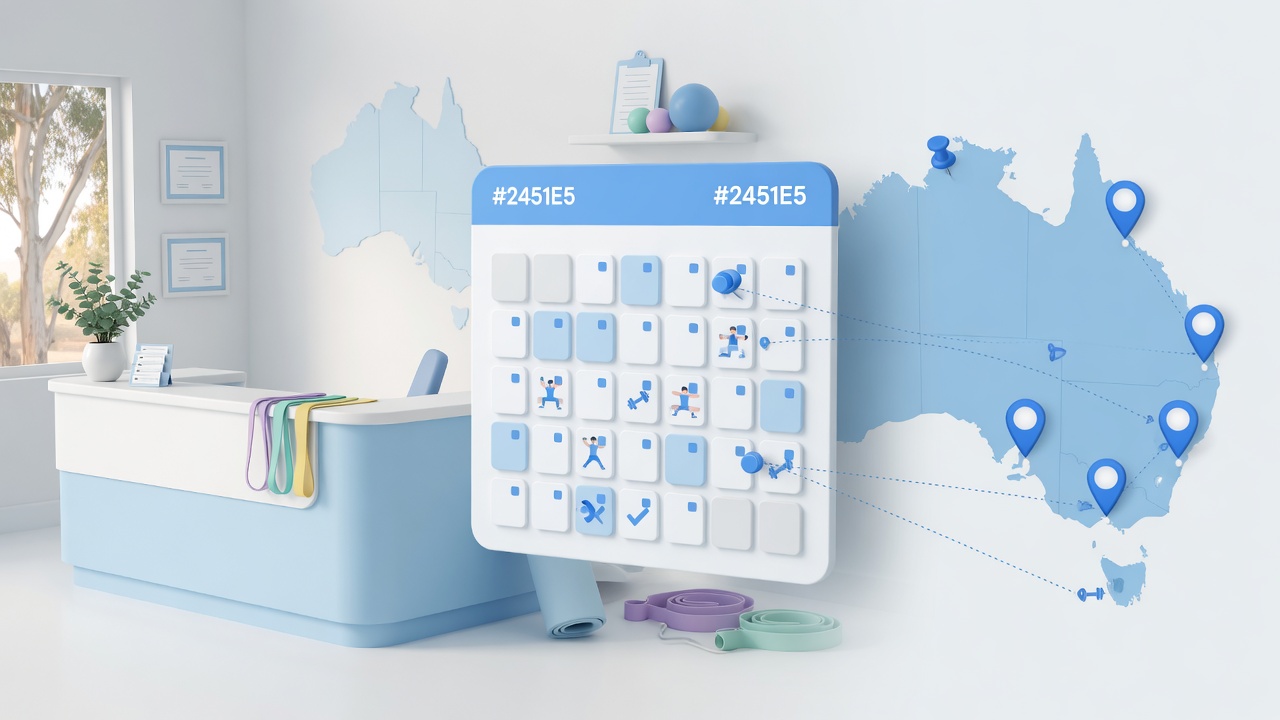
If you run physio clinics across Sydney, Melbourne, Brisbane or regional hubs, each Google Business Profile is a mini landing page that patients actually see. Posts are how you keep those profiles looking alive without rebuilding your website every month. This cadence is built for multi-location groups that need consistency without cloning the same caption onto eight suburbs.
Reception teams notice the difference first. When profiles show fresh photos, accurate holiday hours and clear booking links, fewer callers ask “are you still open?” and more book the right location on the first try. That is the operational win behind the SEO story.
Google’s own documentation on Business Profiles should sit open while you plan: Google Business Profile help. Treat posts as part of local SEO and discovery, not as random social leftovers.
Why cadence beats random bursts
A flurry of five posts before a franchise meeting, then silence for two months, signals neglect. Patients comparing two clinics often open the GBP photo grid and recent posts. Fresh, local, clinically sensible updates reduce the “is this place still open?” doubt.
Ownership model for multi-location groups
Roles that prevent chaos
- Marketing owner: calendar, templates, UTM links, brand voice.
- Clinic lead: local facts, parking notes, practitioner first names, community events.
- Clinician reviewer: clinical claims, especially around injury timelines and outcomes.
- Ops admin: access rights, location group structure in Google Business Profile Manager.
Never let a junior marketer invent recovery timelines. AHPRA advertising guidelines still apply to what you publish on GBP. Keep claims conservative and evidence-aware.
The weekly cadence (per location)
Rotate four post types so suburbs do not receive identical copy:
- Week A – Service spotlight: e.g. sports physio for netball knee pain in [suburb], with who it suits and how booking works.
- Week B – Practitioner or team: short intro, languages spoken, interest areas. Real photo, not stock.
- Week C – Patient education: one actionable tip (ice vs load, when to get assessed after a sprain). No miracle language.
- Week D – Local proof: clinic walk-in tour, new equipment, parking update, or community club partnership.
Each post needs: a photo taken at that site, a sentence naming the suburb, a clear next step (“Book online” / “Call the [suburb] clinic”), and a tracked link where Google allows it.
Monthly layer for the group
- One seasonal theme across all clinics (e.g. winter running load) with customised suburb intros.
- One review-response sprint: answer every new review within 48 hours in the location voice.
- One NAP audit: phone, hours, holiday closures, wheelchair access.
- One photo purge: remove outdated staff or renovated rooms.
Pair GBP hygiene with on-site local SEO. If your homepage is thin on service-area clarity, borrow ideas from winning near-me searches without sprawling service-area pages.
Templates that travel across clinics
Give clinic leads fill-in-the-blank structures:
Keep character length readable on mobile. NN/g’s guidance on scanning still applies to the tiny GBP UI: how users read on the web.
Offers without looking desperate
Monthly offer posts work when they are specific: “Initial assessment slots released for [month] at [suburb]”, not “50% off all pain”. Avoid bait that your reception team cannot honour. If you run NDIS or DVA processes, say what patients should bring rather than oversimplifying eligibility.
What to measure each month
- Calls, direction requests and website clicks per location in GBP insights
- Post-level clicks where available
- Booking attribution notes (“found on Google”) at reception
- Review velocity and average rating per site
- Duplicate listing suppressions completed
When one suburb outperforms, inspect photos, hours accuracy and response quality before assuming “better SEO”. Often the winner simply looks open and cared for.
90-day rollout for a 5–15 clinic group
- Days 1–30: Verify ownership of every profile, fix categories (Physiotherapist), services, and hours. Build the shared calendar.
- Days 31–60: Launch weekly posting with clinician approval SLA under 48 hours. Train clinic leads on photo standards.
- Days 61–90: Add monthly themes, review-response QA, and a short internal leaderboard on profile completeness (not vanity likes).
MissionArmy helps clinic groups connect GBP discipline to wider acquisition across healthcare clinics and SEO. If you want a system rather than another spreadsheet nobody opens, see how it works.
Mistakes multi-location physio brands make
- Posting the same image with the suburb name swapped in the caption only
- Letting closed temporary hours linger after renovations
- Using a national phone number that confuses local pack relevance
- Deleting negative reviews instead of responding and improving ops
- Ignoring ethical review generation until ratings sag
Photo and video standards that travel across clinics
Give every clinic a one-page shot list: reception, treatment room, exercise area, parking signage, team in clinic uniform, and one community touchpoint. Natural light beats heavy filters. Short vertical clips of supervised exercise progressions work well as GBP video where available, provided patients consent and faces of minors are never shown without proper authority.
- Filename and caption include suburb for internal asset management
- No stock photos of models in gyms that are not your clinics
- Remove ex-staff within seven days of departure
- Keep a shared drive folder per location with approved shots only
Connect GBP visuals to your wider local acquisition work via organic marketing and a free call if you want the cadence operated for you.
QA and compliance loop
Build a simple checklist every post must pass before publish: suburb named, clinical claim approved, booking link correct for that location, image taken on-site, no competitor smears, no guaranteed outcome language. Marketing can draft. A named clinician signs off. Store the approval in your project tool so audits are boring.
When a clinic goes offline for fit-out, switch GBP hours the same day and pin a post about temporary arrangements. Patients punish silent closures more than honest delays. After reopening, flood the profile with fresh photos in the first fortnight so Google and humans both see the change.
Linking GBP to the website without leaking equity
Use UTM parameters on website links from posts so you can see which suburbs drive bookings. Land people on location pages or booking widgets that match the clinic they tapped, not a national homepage that forces another choice. If you lack location pages, at least deep-link to a booking SKU filtered by site.
Keep the primary website URL on GBP stable. Do not rotate vanity URLs weekly. Stability helps patients and helps search systems trust the entity. For search strategy beyond posts, use SEO and the SEO/AEO/GEO blueprint.
Franchise vs owned groups: cadence differences
Owned groups can enforce one calendar tool and one reviewer roster. Franchise networks need brand-safe templates plus local freedom for community posts. Give franchisees three locked templates and two open slots monthly for true local partnerships (sports clubs, aged-care talks) so the feed does not look centrally cloned.
- Central: brand voice, clinical claim library, design frames
- Local: names, parking, practitioner bios, community events
- Shared: monthly theme and reporting dashboard
- Escalation: who can pause a location’s posting during a complaints event
Worked example: one week across three suburbs
Monday: Bondi clinic posts a sports physio spotlight with a photo of the exercise area and a booking link filtered to that site. Tuesday: Parramatta clinic introduces a new practitioner who speaks Mandarin and English, with credentials checked against your HR file. Wednesday: corporate marketing drafts a shared education post on graded return to running; each clinic localises the first sentence with suburb and parkrun references where true. Thursday: review-response sprint across all open reviews. Friday: ops audits hours for the long weekend and schedules a temporary hours update.
None of that requires a novel campaign. It requires a calendar someone opens. Put the calendar in the same tool reception already uses so it does not become another ignored marketing login. If a clinic misses two weeks, treat it like a missed opening checklist: coach, then reassign ownership.
When you are ready to connect GBP discipline to paid search and broader acquisition, review SEO, AEO and GEO and healthcare industry pages.
Patients choose the clinic that feels real on Google. A steady posting cadence, local photos and accurate hours do more for multi-location physio groups than another generic blog about “wellness”.